
If you’ve ever taken out a set of braids and felt like your hair got longer, you’re not imagining things. But the reason may surprise you.
Quick answer: Braiding your hair does not make it grow faster. Your hair’s growth rate is set by genetics, your hormones and your overall health. What braids do is protect your strands from breakage. That lets you keep the length your hair naturally grows, which is why many people see real length gains after wearing braids.
At Azmera Braiding, this is one of the questions we hear most often. So let’s break down what actually happens to your hair under braids, and how to make them work for your growth goals.
How Hair Growth Actually Works
To understand what braids can and can’t do, you need to know how hair grows. Every strand comes from a hair follicle under your scalp. Each follicle goes through a repeating cycle with three main phases:
- Anagen (growth phase): This lasts about 2 to 7 years. The follicle is actively producing hair, and about 85 to 90 percent of your hair is in this phase at any time.
- Catagen (transition phase): This lasts about 2 to 3 weeks. Growth slows and the follicle shrinks.
- Telogen (resting phase): This lasts about 3 months. The old hair rests and eventually sheds, and a new hair starts growing in its place.
On average, scalp hair grows about half an inch (around 1.25 cm) per month, or roughly 6 inches per year. That rate is decided inside the follicle, not by the hairstyle sitting on top of your head. No braid, twist or bun can reach down into the follicle and speed it up.
So Why Does Hair Seem Longer After Braids?
The answer is length retention. Your hair is growing all the time, but many people never see that growth because their ends break off as fast as the roots grow. If your hair grows half an inch a month but you lose half an inch to breakage, you’ll feel like your hair is “stuck” at the same length.
Braids change that balance in several ways.
1. Less Daily Manipulation
Everyday combing, brushing, detangling and restyling puts stress on your strands. Once your hair is braided, it’s left alone for weeks. Less handling means less breakage.
2. Protected Ends
The ends are the oldest and most fragile part of your hair. Braids tuck them away from friction against clothes, collars, scarves and pillowcases.
3. Less Heat Damage
While you’re wearing braids, you’re not using flat irons, curling wands or blow dryers every day. Heat is one of the biggest causes of dry, brittle hair and split ends.
4. Stronger Strands Together
When strands are woven together, they support each other, a bit like the fibers in a rope. A braided section resists snapping better than loose strands.
5. Fewer Tangles and Knots
Textured and curly hair is prone to tangles and single-strand knots, which often lead to breakage during detangling. Braids keep strands organized and stretched, so fewer knots form.
In short, braids don’t make your hair grow faster. They help you keep what you grow.
The Right Way to Braid for Hair Growth
Braids only protect your hair when they’re done and cared for properly. Done badly, they can cause the exact damage you’re trying to avoid.
Before You Get Braided
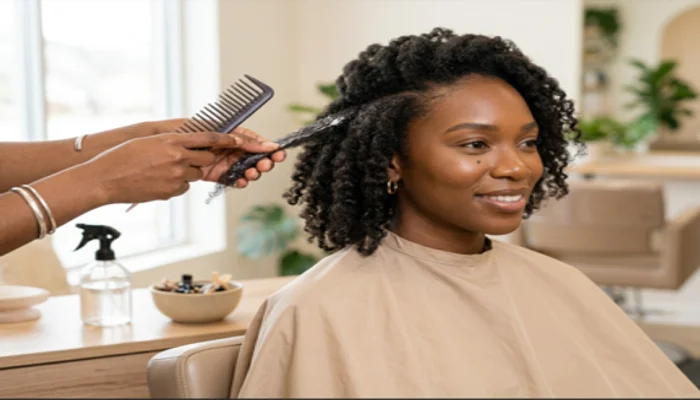
- Start with clean, moisturized hair. Wash, deep condition and apply a leave-in conditioner before your appointment.
- Trim damaged ends. Split ends travel up the hair shaft if left alone.
- Detangle fully. Braiding over knots leads to breakage when you take the braids out.
Choosing the Right Style
- Knotless braids start with your natural hair and gradually add extension hair. They put less tension on the scalp than traditional box braids, which makes them a gentle choice for growth goals.
- Medium or large braids are usually safer than very small micro braids. Micro braids take longer to install and remove, and removal can cause more breakage.
- Cornrows are great for short-term protection and keeping hair flat under wigs or scarves. They use the same technique as the Dutch braid, so our step-by-step Dutch braid guide is a good place to start if you want to learn it yourself.
- Lightweight extensions are better than very long, heavy ones, which pull on the roots over time.
Tension Matters Most
Braids should never hurt. If you feel pain, see small bumps around your hairline, or can’t move your head comfortably, the braids are too tight. Constant pulling on the follicles can cause traction alopecia, a type of hair loss that can become permanent if the tension continues. A skilled braider will always make sure your edges and hairline are handled gently. Not sure what your hairline can handle? Talk to our braiders before you book and we will recommend a style that suits your hair.
How to Care for Your Braids
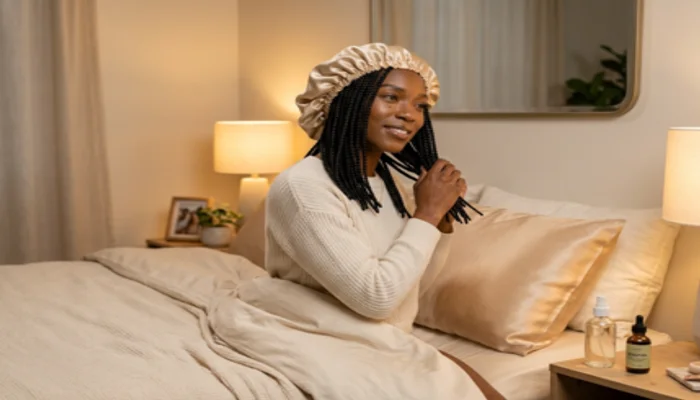
- Moisturize your hair and scalp every few days with a light leave-in spray or water-based moisturizer.
- Apply a small amount of light oil to your scalp if it feels dry or itchy.
- Cleanse your scalp every 1 to 2 weeks with a diluted shampoo or scalp cleanser.
- Sleep with a satin bonnet, satin scarf or silk pillowcase to reduce friction.
- Avoid heavy gels, butters and product buildup at the roots.
How Long Should You Keep Braids In?
Most braiders recommend wearing braids for 6 to 8 weeks. Keeping them in much longer can lead to matting at the roots, product buildup, dryness and breakage near the scalp from new growth being twisted. After taking braids down, give your hair a rest of at least one to two weeks before your next install.
Taking Braids Out Safely
Removal is where a lot of hair gets lost. Take your time, work in small sections, and use a conditioner or oil to help loosen buildup. It’s normal to see some shed hair. You naturally lose 50 to 100 hairs a day, and that hair stays trapped in the braid until you take it out. If you would rather leave it to a professional, our braiding services are built around keeping your hair healthy.
Signs Your Braids Are Hurting, Not Helping
Watch for these warning signs:
- Pain, tenderness or a pulling feeling that lasts more than a day or two after install
- Small red bumps or pimples along the hairline
- Thinning edges or bald patches around the temples
- Extreme itching or flaking that doesn’t improve with care
- Hair breaking off at the root when braids are removed
If you notice any of these, take the braids out early and let your scalp recover. If thinning continues, see a dermatologist.
Healthy Habits That Support Hair Growth From the Inside
Since braids only protect your hair, true growth support comes from your body. Hair is made of a protein called keratin, so your diet plays a big role.
- Protein: eggs, lentils, chickpeas, fish, chicken and yogurt
- Iron: spinach, red meat and beans (low iron is a common cause of hair shedding, especially in women)
- Zinc and vitamin D: both support healthy follicle function
- Biotin: helpful mainly if you’re actually deficient, which is uncommon
- Water and sleep: hydration and rest support your whole body, including your scalp
Stress, hormonal changes, thyroid problems and certain medications can also affect hair growth. If you notice sudden or heavy hair loss, see a doctor.
Frequently Asked Questions
Does hair grow faster with braids?
No. Hair does not grow faster with braids. Your growth rate is controlled by your follicles, genetics and health, and is usually about half an inch per month. Braids help by reducing breakage, so you keep more of the length you grow. That’s why hair often looks longer after braids come out.
What will happen if I braid my hair every day?
Braiding your hair daily with a loose, simple braid, like a plait before bed, can reduce tangles and friction. But braiding tightly every day, or pulling on the same spots repeatedly, can stress your hairline and lead to breakage or traction alopecia. Daily braiding also involves daily combing, which adds manipulation. If you braid often, keep it loose, change where you part, and moisturize your ends.
What is the #1 hair growth?
There isn’t one magic solution, because hair growth depends on genetics, nutrition, scalp health and hormones. For hair loss or thinning, topical minoxidil is the most widely studied and approved over-the-counter treatment, and a dermatologist can advise whether it suits you. For everyday growth, the best approach is a balanced, protein-rich diet, a healthy scalp, gentle handling and protective styles like braids to keep your length.
Can hair grow 2 inches in a month?
No. Hair usually grows about half an inch (1.25 cm) per month, so 2 inches in a month isn’t realistic for normal scalp hair. Claims of 2 inches a month usually come from length retention after years of breakage, stretched hair after braids, or simple miscounting. Over a year, healthy hair grows around 6 inches.
How long should I leave braids in for hair growth?
6 to 8 weeks is the ideal range for most people. After that, buildup, matting and breakage at the roots become more likely, which cancels out the protective benefits.
Are knotless braids better for hair growth than box braids?
Knotless braids are often gentler because they put less tension and weight on the roots at the start of each braid. Both styles can protect your hair if they’re installed with the right tension and cared for properly. Not sure which suits you? See the braiding styles we offer.
Can braids cause hair loss?
Yes, if they’re too tight, too heavy or worn too long. This is called traction alopecia. It usually starts around the edges and temples. Caught early, it can often be reversed by removing the tension. Caught late, it can become permanent.
Should I oil my scalp while wearing braids?
A light oil can soothe a dry scalp, but use it sparingly. Heavy oils and butters build up at the roots and can clog the scalp. Moisturize the hair itself with a water-based leave-in, and use oil only to seal or soothe.
Ready for braids that protect your length?
Browse our braiding services, learn more about Azmera, or book your appointment today.